A few weeks ago, I found some interesting items that were selling on Whatnot.com. Interesting how? you ask. Apparently, we have an entire generation of 20- and 30-year-olds who love items made from old quilts. They call it “cottage core.” I call it mean to old quilts. But whatever.
The sellers have a word for the quilts that nobody wants whole: cutter quilts. One lady chops quilts into 12″ squares and sells them for crazy money. No, really crazy. $20 or so. You math that and let me know what a full-size quilt is bringing in this manner.
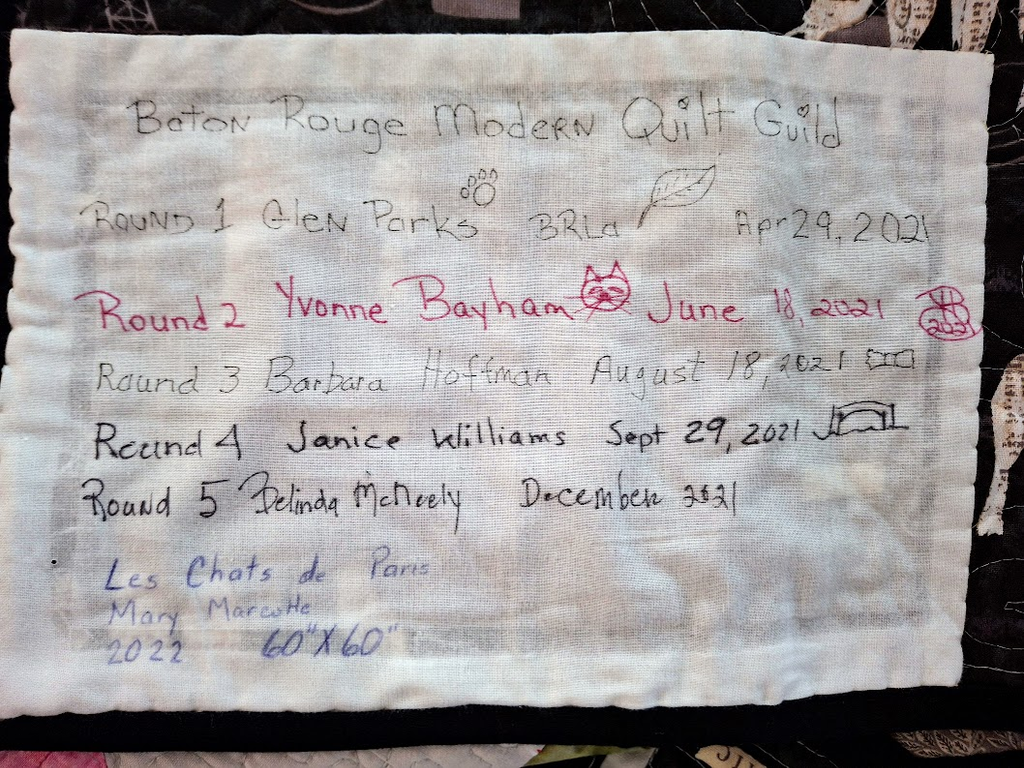
The 2021 round robin quilt from MQG
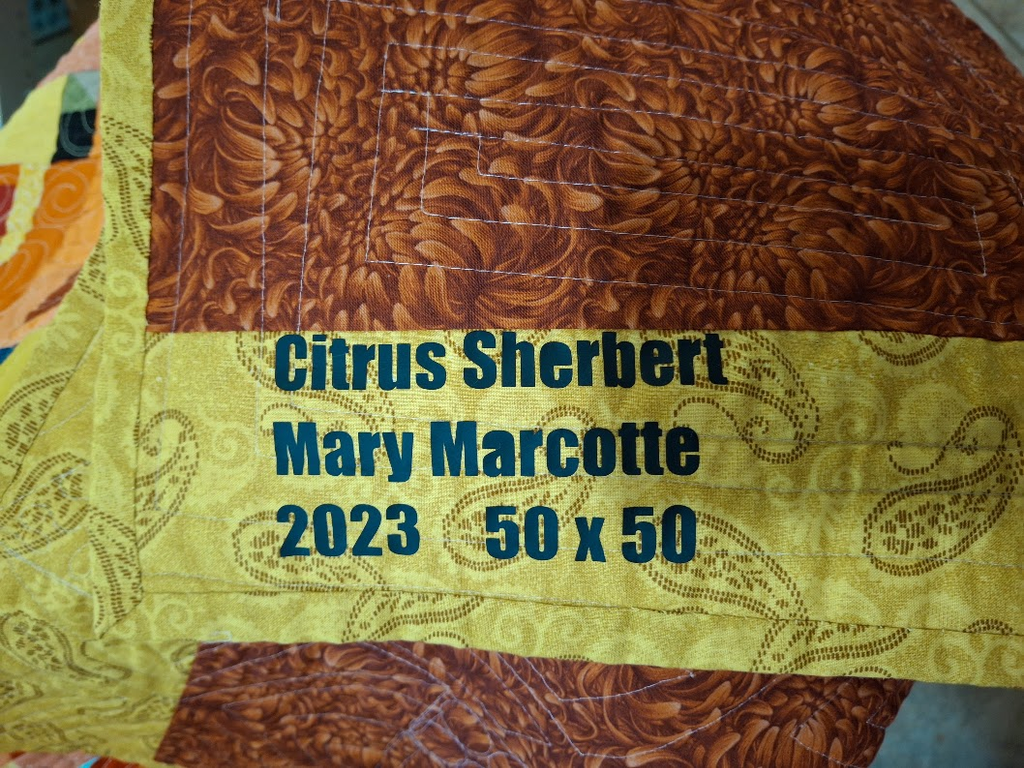
But I digress. I’ll tell you how I label my quilts: I always include the title of the quilt, my name, the size (in inches) of the quilt, and the year it is completed. Those last two are on the same line but not always in the same order.
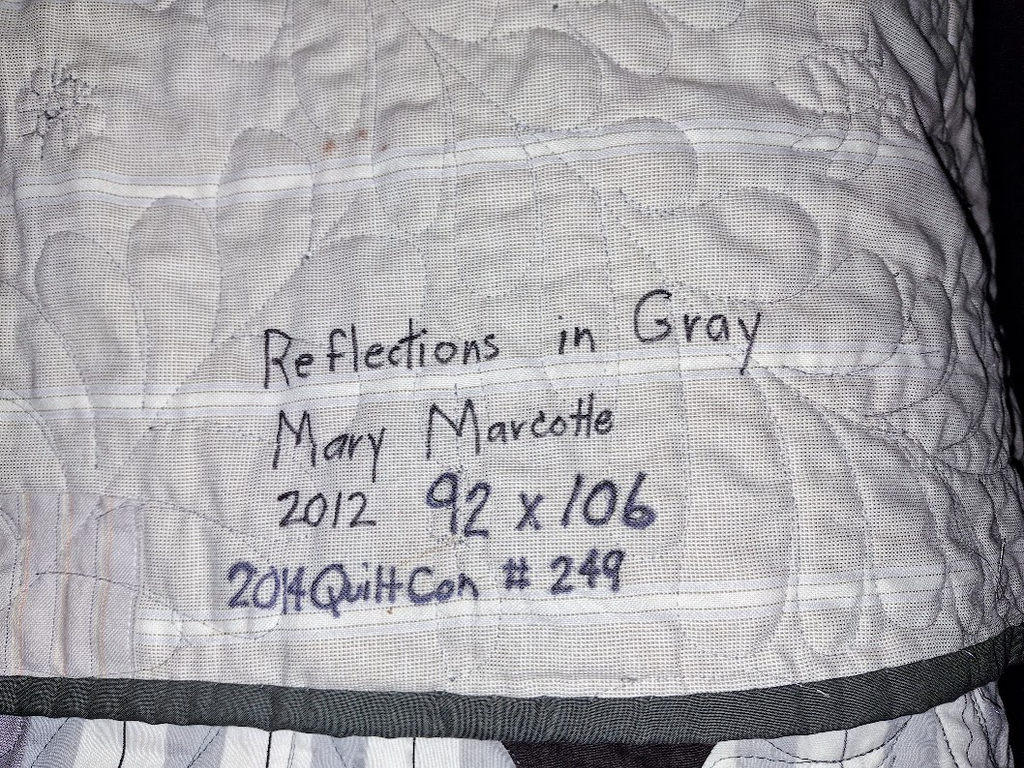
I’ve tried different ways to label quilts, but thus far, permanent marker is winning. Since my handwriting is blatantly icky, it’s a shame that heat press vinyl doesn’t last. I’ve used it on a couple of quilts for the grandchildren. The vinyl goes directly onto the quilt back. My thinking was that it would be there forever. Forever, it turns out, is only a few washes away. They get washed and dried regularly, and the letters are already falling off. I’ll have to write it in marker when all of the information is gone.
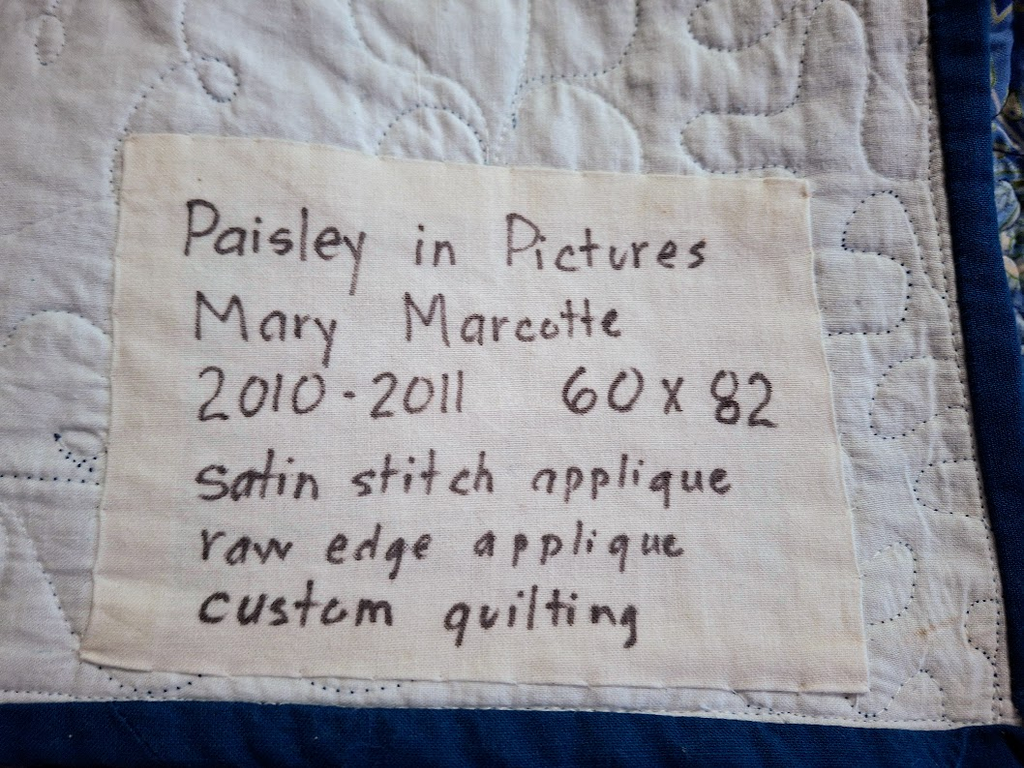
For a while I was really into this labeling thing and included techniques. No more. It seems like too much. If you don’t know what applique is, telling you won’t help. And if you do know, you’ll recognize it immediately.
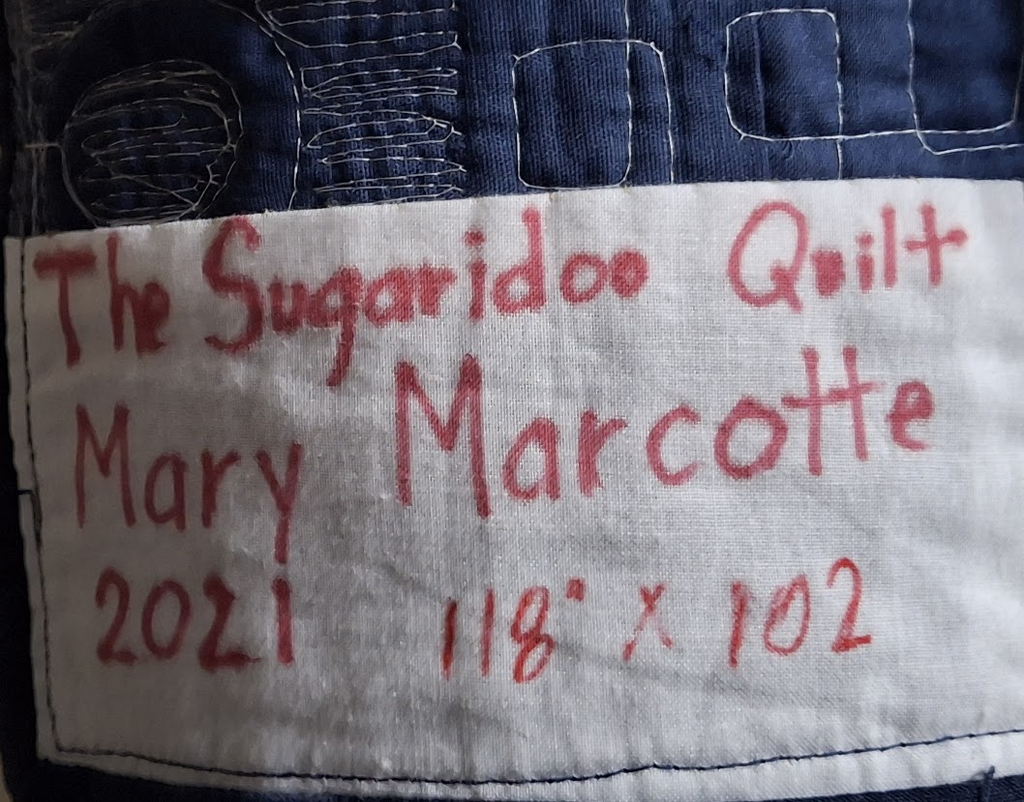
My biggest grief about using markers is that they often bleed. On “The Sugaridoo Quilt” label I discovered that pressing the fabric and writing while it’s still hot helps. It’s very likely that I also change to ink to write the size.
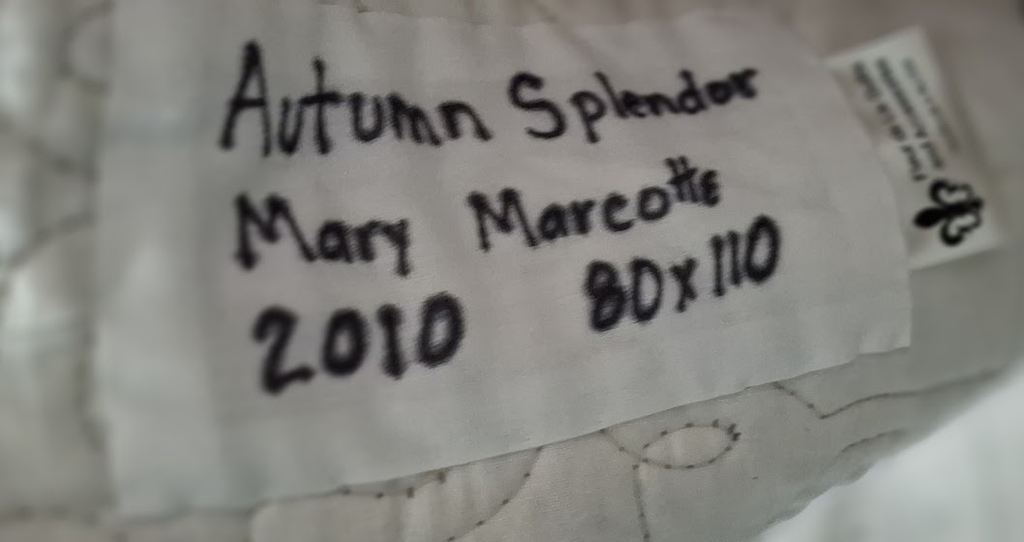
I am aware that there are many different markers available, but they are not cheap and I am. I don’t want to purchase every type of marker to find the correct one. Right now, I have a couple of Sharpie in different sizes so I can experiment. Honestly, though, I’ll just be satisfied. Some of these quilts are 20 and 30 years old. Labels may not matter after all, if people begin cutting them up to repurpose them.
Truly, though, the backstory explains what brought me to this post. I commented on one seller’s shop asking if she checked label to know how old the quilt was. She was pretty snippety, “I’ve been doing this for 40 years, so I can tell if a quilt is old. I don’t need a label, and anyway, labels don’t always help.”
In my naiveté, I was going to explain that old quilts with no labels are very likely pre-1976. America was celebrating 200 years and there was a huge push to make quilts and to label them. I suppose that is information she doesn’t need.